|
December 2025
|
|
|
Mealybug Mayday
The Texas Agriculture Commissioner has issued an urgent statewide warning following the first-ever detection in North America of the pasture mealybug (Helicococcus summervillei), a highly destructive invasive pest. The insect has been confirmed in multiple Texas counties and is already causing widespread damage to pastureland, raising serious concerns for the state’s livestock and forage industries.
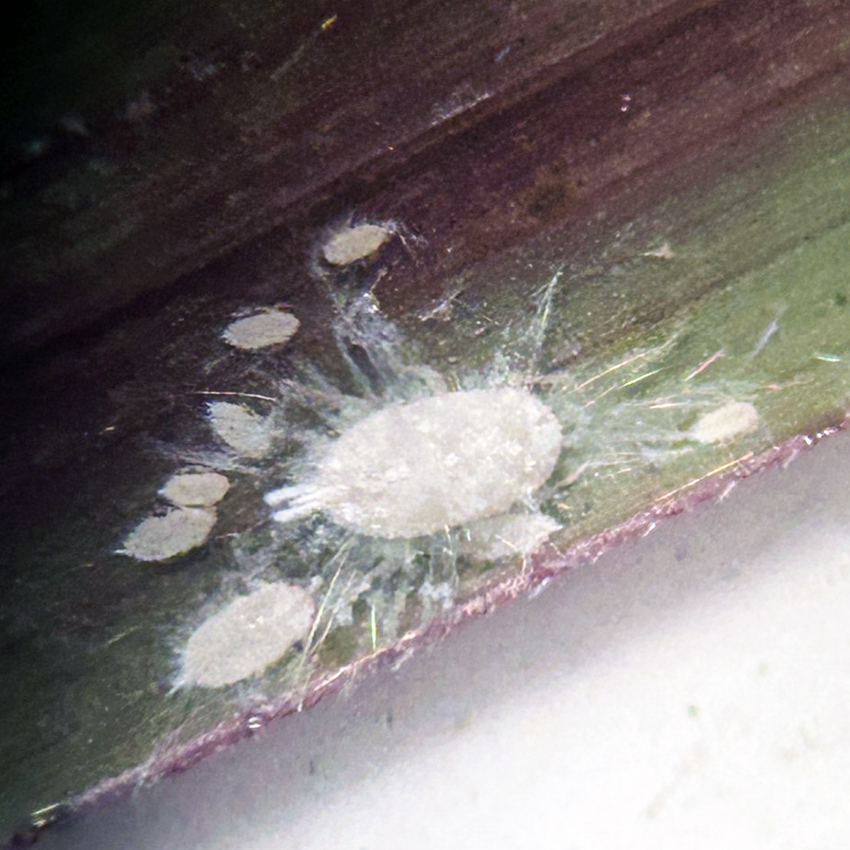
Adult pasture mealybugs are very small, measuring approximately 2–5 mm in length. They are oval-shaped and typically covered with a waxy coating that gives them a white, fuzzy, or “mealy” appearance. Wispy white hairs, roughly the length of the body, extend outward on all sides. Adults live for about 100 days but do not feed. Females can produce up to 100 offspring within a 24-hour period, resulting in multiple generations per life cycle. Males have a shorter life cycle and possess wings. Nymphs resemble adults but are much smaller (approximately 1 mm), lack hairs, and are generally only visible with magnification.
Nymphs feed by sucking plant sap using piercing-sucking mouthparts, simultaneously injecting toxic saliva into the plant. Their sugary excretions, known as honeydew, promote the growth of sooty mold fungi, which blocks photosynthesis and further weakens affected plants. The pest’s ability to reproduce rapidly, feed covertly near or below the soil surface, and infest a broad range of grass species makes it particularly dangerous and difficult to detect until significant damage has occurred. Note: pasture mealybugs are often can also be found under cow patties.
Signs of infestation include rapid leaf yellowing, purpling or reddening of foliage, stunted growth, weakened root systems, thinning turf, and progressive dieback. The pasture mealybug is known to feed on Bermudagrass, Bahia grass, Johnsongrass, sorghum–sudangrass hybrids, St. Augustine grass, bluestems, and other tropical or subtropical grass species.
An estimated 20 counties across South and Central Texas are currently affected, including Cameron, Hidalgo, Willacy, Refugio, Calhoun, Victoria, Goliad, DeWitt, Lavaca, Fayette, Jackson, Matagorda, Brazoria, Galveston, Wharton, Colorado, Austin, Washington, Burleson, Brazos, and Robertson.
The Texas Department of Agriculture is coordinating a rapid response with Texas A&M AgriLife Extension and USDA’s Animal and Plant Health Inspection Service to limit the spread and protect producers. At present, there is no effective labeled insecticide for controlling this pest, but research trials are underway to identify viable integrated pest management strategies. Producers are strongly encouraged to scout their land regularly and report suspicious findings, as early detection and widespread vigilance are critical to slowing the spread of this unprecedented agricultural threat.
More about the pasture mealybug: Tx Ag Extension
Official report: texasagriculture.gov
|
|
|
|
|
|
|
|
Not Bothered by the Sting
Researchers have identified a species of pond frog with an unusually high resistance to venom, allowing it not only to prey on hornets but also to tolerate multiple stings. This discovery offers new insight into how some animals withstand venom and may provide a valuable model for studying the biological mechanisms behind venom and pain resistance.
Stomach-content analyses of some amphibians have revealed the remains of adult hornets. However, it is unclear whether these frogs avoid being stung during consumption or can tolerate the venom itself. To investigate this question, researchers conducted controlled laboratory experiments to observe direct interactions between black-spotted pond frogs (Pelophylax nigromaculatus) and three hornet species known for their potent venom: Vespa simillima, V. analis, and V. mandarinia (the Asian giant hornet).
In the study, each adult frog was paired with a single worker hornet of comparable size, and each frog was tested only once. The largest frogs were paired with Asian giant hornet workers. Observations showed that the frogs actively attacked the hornets, and 93%, 87%, and 79% of the frogs successfully consumed Vespa simillima, V. analis, and V. mandarinia , respectively. This occurred despite the frogs being stung inside the mouth or around the eyes. Notably, the frogs showed no visible signs of injury or distress, even after multiple stings.
Hornet stings are known to cause intense pain, tissue damage, and serious systemic effects such as red blood cell destruction and cardiac dysfunction, which can be fatal to many animals. For example, a mouse of similar size to the pond frogs can die from a single hornet sting. Prior research has shown that the perceived pain of a sting does not always correlate with venom lethality across species. The study’s findings suggest that these frogs may possess a dual resistance to both the painful and toxic effects of hornet venom.
This discovery raises important questions about the mechanisms underlying such resistance, including the possible roles of physical barriers, specialized proteins, or unique physiological traits. Black-spotted pond frogs may therefore serve as a promising model organism for investigating how vertebrates evolve resistance to venom and pain, with potential implications for broader medical and biological research beyond amphibians.
Read the research: Sugiura 2025
|
|
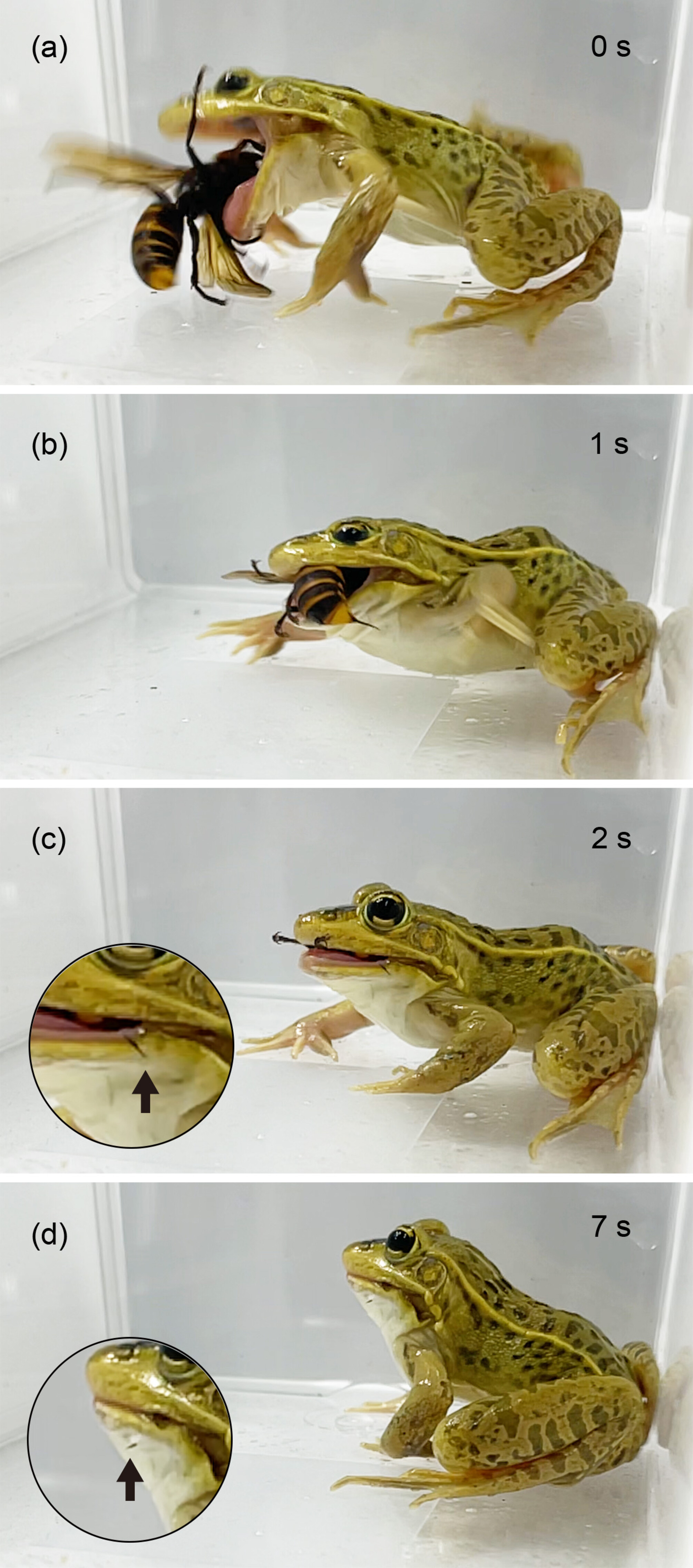 Temporal sequence of a pond frog (Pelophylax nigromaculatus) attacking a Vespa mandarinia worker. Close-up views of the hornet's stinger embedded in the frog's mouth are shown in the circular insets in (c) and (d). Credit: Sugiura 2025 Temporal sequence of a pond frog (Pelophylax nigromaculatus) attacking a Vespa mandarinia worker. Close-up views of the hornet's stinger embedded in the frog's mouth are shown in the circular insets in (c) and (d). Credit: Sugiura 2025
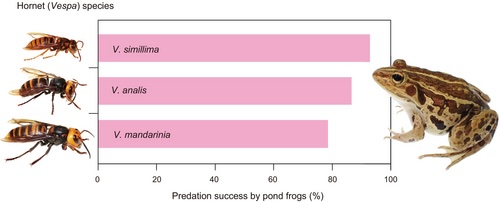 Percentages of successful predation on hornet workers by the pond frog. Credit: Sugiura 2025 Percentages of successful predation on hornet workers by the pond frog. Credit: Sugiura 2025
|
|
|
|
|
|
Kitchen Herb Repels Ants
Researchers found that oregano essential oil derived from Origanum vulgare exhibits strong repellent properties against red imported fire ants (Solenopsis invicta, RIFA) and hybrid imported fire ants (S. invicta × S. richteri, HIFA).
Oregano oil contains high levels of the natural compound carvacrol (63.9%). Carvacrol is plant-based, biodegradable, and food-safe. Through chemical analysis, testing of related compounds, and computer modeling, researchers identified carvacrol as the primary contributor to the oil’s potent repellent activity. The compound interacts with ants’ pheromone-binding proteins, disrupting chemical communication and interfering with normal nesting behavior.
Carvacrol’s broad-spectrum insect-repellent properties have been demonstrated against a variety of pest species, including bed bugs (Cimex lectularius), rice weevils (Sitophilus oryzae), cattle ticks (Rhipicephalus microplus), and malaria mosquitoes (Anopheles gambiae).
Overall, the study indicates that oregano essential oil has strong potential as an environmentally friendly, non-toxic alternative to synthetic pesticides for managing both RIFA and HIFA populations in agricultural, residential, and garden settings.
Read the research: George et al., 2025
|
|
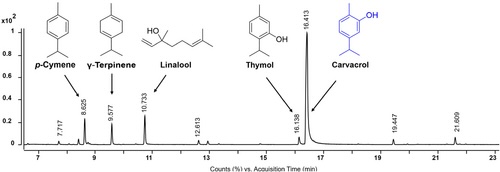
Gas Chromatography-Quadrupole Time-of-Flight Mass Spectrometry (GC–QToF–MS) total ion chromatogram of oregano essential oil showing presence of carvacrol. Credit: George et al., 2025
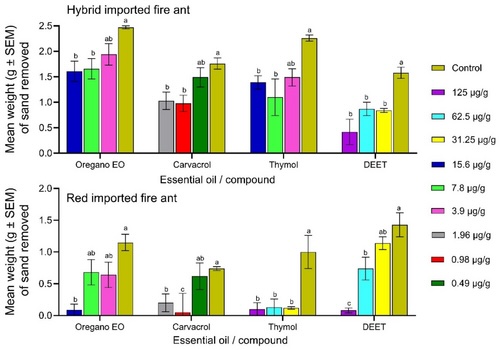
Mean weight (g) of treated sand removed by HIFA and RIFA workers with different doses of oregano essential oil, carvacrol, thymol, and the positive control N,N-diethyl-3-methylbenzamide (DEET). Credit: George et al., 2025
|
|
|
|
|
|
Don’t Mess With Texas Citrus
TISI is offering FREE diagnostic services if you suspect your citrus has either the psyllid pest or the Citrus Greening pathogen, or you would like your citrus plants to be part of our screening survey.
The Asian citrus psyllid (Diaphorina citri) and the Citrus Greening pathogen (Candidatus liberibacter asiaticus) are threatening citrus in multiple Texas counties. By taking samples and monitoring the spread, it is easier to ensure that you and your neighbors are not affected. This pest and pathogen are extremely detrimental to Texas citrus, both economically and agriculturally. The presence of either can greatly affect citrus yield.
If you are interested in having your citrus trees checked or being part of the survey, please contact invasives@shsu.edu. If you are located within 200 miles of our headquarters, we can collect samples and/or provide traps and monitoring services. Otherwise, we will send you easy step-by-step instructions so you can do it yourself. Not only will we share the results and management strategies (where applicable), but you will become part of a multi-county monitoring survey that is striving to improve the health of Texas citrus!
Also Available: TISI offers educational workshops that highlight information about the Asian citrus psyllid, the pathogen Citrus Greening, and what you need to look out for in your own backyard. If you are interested in this, TISI will provide trapping materials, assist with management strategies, and more. Don’t waste another second. Help us stop the spread!
|
|
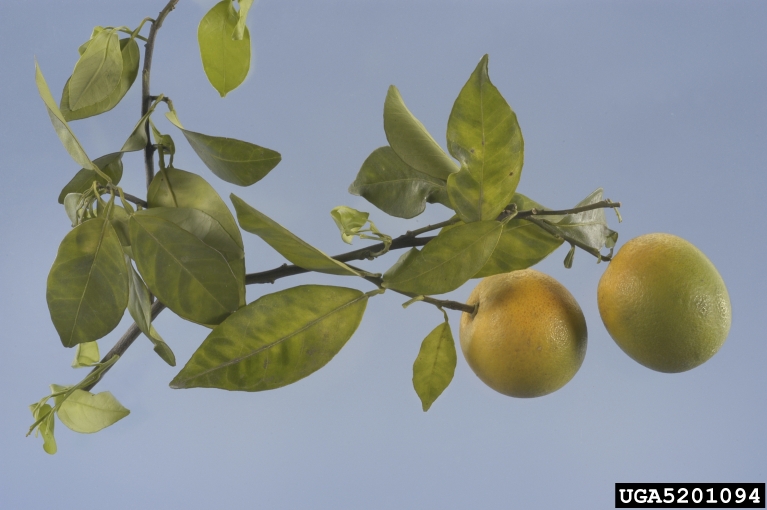
Symptoms of citrus greening bacterium. Credit: Jeffrey W. Lotz, Florida Department of Agriculture and Consumer Services, bugwood.org
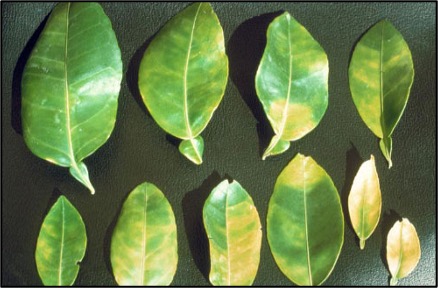
Leaf mottle on grapefruit, a characteristic symptom caused by citrus greening bacterium but also seen on trees infected by Spiroplasma citri. Credit: J.M. Bove.
|
|
|
|
|
|
North American Invasive Species Management Association Training Webinars
This program is designed to provide the education needed for professionals and students who are managing or learning to manage invasive species. The courses include the most current invasive species identification, control, and management techniques, and how to comply with local and federal regulations.
Participants may register and enroll at any time, and will receive a certificate of invasive species management from NAISMA upon completion of the program.
All live webinars are open to the public. Recorded webinars are available to members of NAISMA.
NAISMA 2026 Webinar Schedule:
- January 28, 1pm CST- Rethinking Invasive Species Communication: Updates from National Workshops and Research. REGISTER.
- February 26, 1pm CST- The Surprising Intersection of Marine Biosecurity and Public Health. REGISTER.
|
|

|
|
|
|
|
|
Get Festive, Not Infested
During the holiday season, increased movement of decorations, plants, firewood, and travel can unintentionally spread invasive species. The following simple precautions can help protect ecosystems while allowing the holiday traditions to continue.
- When possible, choose locally sourced or pre-treated greenery.
- Harvest or purchase local firewood- don’t transport wood across county lines.
- Properly dispose of holiday plants and trees after the festivities.
- Don’t be an invasive pathway- Check vehicles, luggage, and gear when traveling.
With a little extra care, you can keep the holiday spirit alive without giving invasive species a free ride.
|
|
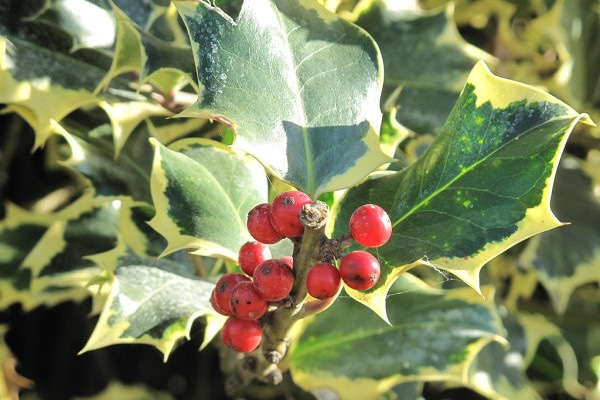 Holly. Credit: 3Tangopaso, Public domain via Wikimedia Commons Holly. Credit: 3Tangopaso, Public domain via Wikimedia Commons
|
|
|
|
|
|
|
|
|
Invasive Spotlight:
Malta Star-thistle
(Centaurea melitensis)
Malta Star-thistle (Centaurea melitensis) is an annual (occasionally a biennial) plant that commonly occurs in open, disturbed habitats such as grasslands, rangelands, open woodlands, fields, pastures, roadsides, waste areas, and cultivated fields. It is native to southern Europe and northern Africa and has become invasive in many regions. This species crowds out native plants, and its spiny flower heads can make infested areas painful or difficult to walk through. Heavy infestations may also cause water stress in native vegetation, even during years with normal rainfall.
Malta star-thistle grows as a basal rosette during winter and later produces stiff, spiny, yellow-flowered stems that typically reach up to 1 meter in height. In the rosette stage, it can be distinguished from similar species by its simple, lobed leaves with smoothly rounded lobes. The terminal lobe is usually broad, rounded, or oval. By contrast, other similar rosettes generally have more angular lobes or leaves that are toothed, serrated, or deeply divided. Rosette leaves begin quite small in mid-winter and gradually grow to approximately 7.5–13 cm (3–5 inches) as the plant matures. The rosette may also have a fuzzy, whitish center. These basal leaves typically wither by the time flowering begins. The flower stems are stiff and openly branched from near or above the base, although very small plants may remain unbranched. Stem leaves are alternate and mostly linear or narrowly oblong to oblanceolate. Leaf margins may be smooth, toothed, or wavy, and the leaf bases extend down the stem (decurrent), giving the stems a winged appearance. The yellow flower head is composed of many small flowers (a composite or asteraceous head) and appears tightly constricted, never opening wide like a dandelion.
When driving, walking, or moving livestock through infested areas, clothing, vehicles, and animals should be inspected and cleaned to remove any fruits or seeds to avoid accidental introduction into uninfested areas. Control is most effective during the rosette stage, before flowering occurs. Small infestations can be managed by hand removal, while larger infestations may require herbicide treatment. The same management strategies used for yellow star-thistle (Centaurea solstitialis) are generally effective for controlling Malta star-thistle as well.
For more information regarding management and removal, see the texasinvasives.org info page HERE. If you believe you have found malta star-thistle, please email a picture and the location it was found to invasives@shsu.edu.
Citizen Scientist reports are fundamental to early response efforts. We appreciate all your dedication and continued support.
|
|

Malta star-thistle ( Centaurea melitensis). Credit: Joseph M. DiTomaso, University of California – Davis, Bugwood.org
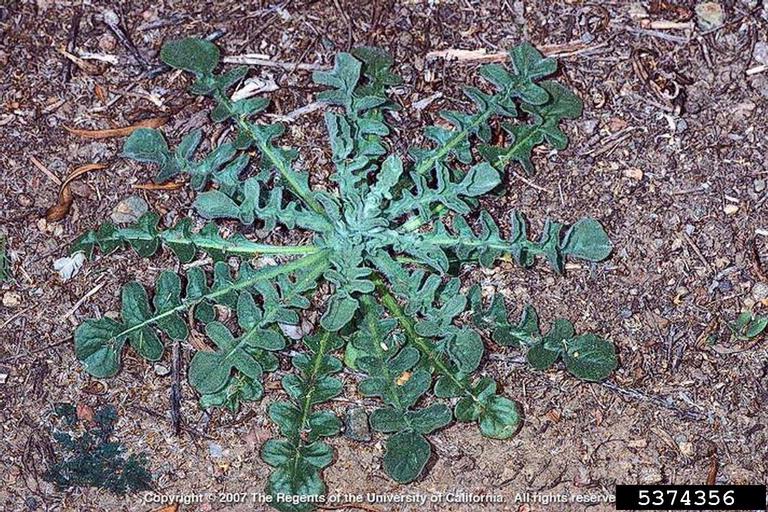
Malta star-thistle foliage. Credit: Joseph M. DiTomaso, University of California - Davis, Bugwood.org
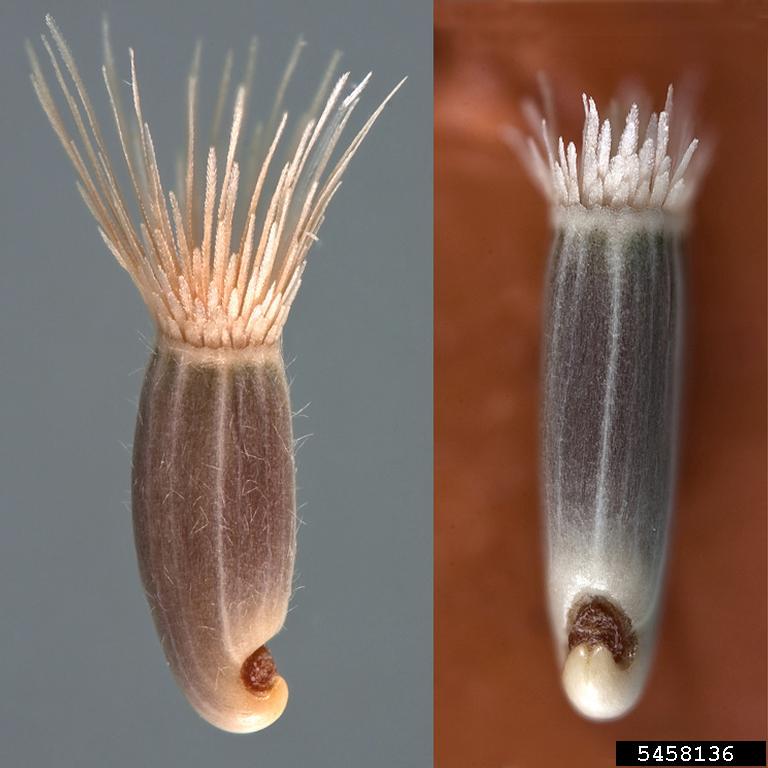
Malta star-thistle fruit. Credit: D. Walters and C. Southwick, Table Grape Weed Disseminule ID, USDA APHIS PPQ, Bugwood.org
|
|
|
|
|
|
More News
Data Modeling Drives Texas A&M War on Cattle Ticks
Researchers have paired cattle movement data with computer modeling to develop location-intelligence tools that can guide tick eradication strategies and help protect U.S. cattle from bovine babesiosis. agrilifetoday.tamu.edu
Texas Beaches Are Seeing More of These Rare, Massive Jellyfish
Texas beachgoers have reported an increase in sightings of Australian white-spotted jellyfish (Phyllorhiza punctata) washing ashore throughout the year. These jellyfish are native to the Western Pacific Ocean but are believed to have been introduced via ship ballast water. mysanantonio.com
Wild Hogs Have Been Spotted Near Three North Texas Neighborhoods: Here's What to Know
Feral hogs (Sus scrofa) have been spotted near several neighborhoods in the Roanoke area of North Texas. The U.S. Department of Agriculture has deployed a private trapper to set hog traps and address the issue. Feral hogs are present in 253 of Texas’ 254 counties. phys.org
Trump Cuts Could Hinder Efforts to Stop Climate-Fueled Spread of Invasive Species
Climate change is accelerating the spread of invasive species by creating warmer temperatures, longer growing seasons, and new dispersal pathways. Funding cuts to research and delayed government action have weakened early detection efforts, potentially leading to long-term ecological consequences. lailluminator.com
The Growing Exotic Pet Trade Drives Illegal Sales Online and a Push for Tighter Rules
The expansion of the exotic pet trade has increased illegal online sales, prompting calls for stronger regulations. Multiple proposals have been submitted by advocacy groups to address loopholes and improve enforcement of existing laws. phys.org
Michigan May Soon Ban Sales of This Stinky Tree And 5 Other Plants
Michigan is considering banning the sale of the non-native callery pear (Pyrus calleryana), known for its strong odor and aggressive spread that crowds out native species. bridgemi.com
Researchers Say Versatile Grass Could Be Used for Sustainable Fuel, Building Materials and More
Silvergrass (Miscanthus sinensis), a high-yield perennial, shows promise as a bioenergy and bioproduct crop in the U.S., with potential uses including animal bedding, erosion control, and renewable fuels. phys.org
Doomed Ants Send a Final Scent to Save Their Colony
Ant pupae infected with deadly pathogens emit a chemical signal that alerts the colony to remove them, preventing the spread of disease. Although the infected pupa dies, the behavior protects the colony as a whole. sciencedaily.com
Winter Is the Best Time to Check Trees for Hemlock Woolly Adelgid
Residents are encouraged to inspect eastern hemlock trees (Tsuga canadensis) during winter for signs of the invasive hemlock woolly adelgid, which appears as white, cottony ovisacs and can kill trees within a decade if untreated. michigan.gov
Garden Ponds Often Serve as Potential Sources of Plant Invasions
While private garden ponds are increasingly used to support urban biodiversity, their popularity is also contributing to the spread of invasive aquatic plant species. ecolres.hun-ren.hu
|
|
|
|
|
|
Sentinel Pest Network and Invaders of Texas Workshops
Invaders of Texas workshops train volunteers to detect and report invasive species as citizen scientists. Workshops, which are free, are designed to introduce participants to invasive species and the problems they cause, cover aspects of invasive species management, teach identification of local invasive plants, and train participants to report invasive plants using the TX Invaders mobile application. The workshop is 7 hours long (usually on a Saturday, but scheduling is arranged with each individual host group). The workshop satisfies Master Naturalist training requirements.
Sentinel Pest Network workshops serve to increase the awareness and early detection of a set of particularly important invasive species to help prevent their spread into Texas or their further spread within Texas. Participants learn to identify species such as the Emerald Ash Borer, Cactus Moth, Asian Longhorned Beetle, and other pests of regulatory significance, and to report them. The workshop is 3.5 hours long. The workshop satisfies Master Naturalist training requirements.
Upcoming Workshops:
January
Invasive Species of Central Texas
Heart of Texas Master Naturalists
January 22th, 2025 6-8pm
Location: East Waco Library
CONTACT: Cari Spiares – crspiares@yahoo.com
CITRUS WORKSHOPS: Stay tuned for upcoming 2023 virtual weekend presentations about Citrus diseases and FREE testing we offer at Texas Invasive Species Institute.
|
|
|
|




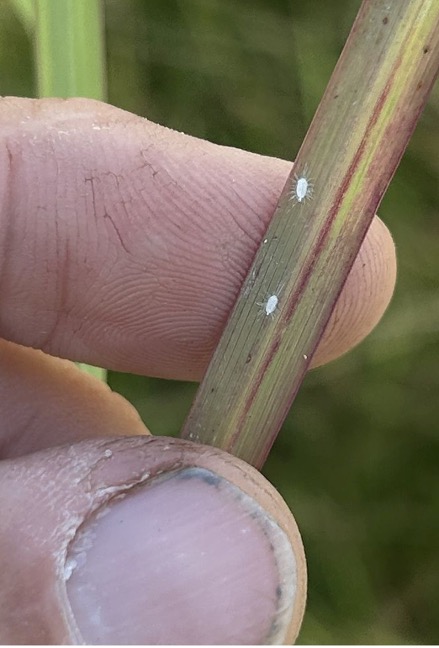 Pasture mealybug on damaged grass blade with reddening. Credit: Edited from photo by Stephen Biles
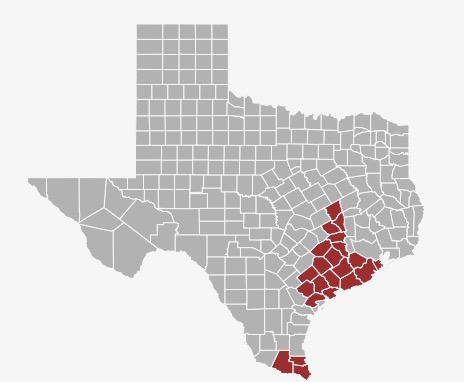 Texas counties with known infestations of pasture mealybug during the current season. Credit: Biles et al., 2025