 |
 |
 |
 |
 |
September 2016
|
|
|
Imported Red Fire Ants Can Have Complex Ecological Effects
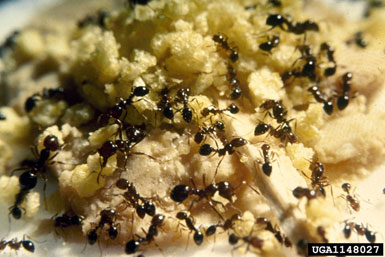
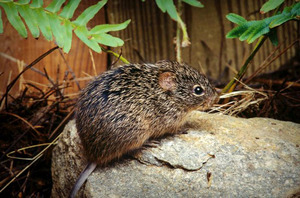
Researchers at Texas A&M University studied the effects of the red imported fire ant (Solenopsis invicta) on small mammal populations, tick loads and pathogen presence in southeast Texas by reducing the ant population in treatment plots and comparing the results to those from untreated plots. They found that their index of small mammal population size was almost two times larger on the treated plots than the control plots. Tick load on hispid cotton rats (Sigmodon hispidus) was no different in the treated plots compared to the control plots, but for the fulvous harvest mouse (Reithrodontomys fulvescens) it was 27 times higher in the treated plots. Drag sampling for ticks uncovered no difference between the treatment and control plots. Seven Ambylomma maculatum ticks were infected with the human pathogen Rickettsia parkeri, although the proportion of ticks infected with R. parkeri was not different between treatment and control plots. These results confirm those of other studies that show that the red fire ant has a negative impact on small mammal populations, and also demonstrate that for at least one species of small mammal, the ants provide a benefit by reducing its tick loads. Additionally, fewer small mammals with fewer ticks in the presence of red fire ants also means that the likelihood of the transmission of tick-borne diseases decreases in the presence of red fire ants. For more information, read the research article. |
|
Credit: USDA APHIS PPQ Archive
Hispid Cotton Rat (Sigmodon hispidus) |
|
|
 |
|
|
Using Soil Bacteria to Control Cheatgrass
Cheatgrass (Bromus tectorum) is a highly invasive plant that has taken over much of the western U.S. and several other states. This annual outcompetes native plants for water and nutrients and alters fire regimes to the detriment of native plants. In sagebrush areas it threatens the sage grouse and the pygmy rabbit, both threatened by habitat loss. Cheatgrass is typically controlled with herbicide, but it is not very effective, partly because it needs to be applied year after year. Now, a scientist in Washington State who studies soil microbes has discovered a soil bacterium that is helping to control cheatgrass. Dr. Ann Kennedy found that a particular native species of bacterium inhibits the growth of the grass' roots, giving native plants the chance they need to survive and outcompete the cheatgrass. Unlike with herbicides, the bacteria remain in the soil for several years, and are not harmful to the native plants. The method does take a re-orientation of one's view of "control", however, because it takes several years for the cheatgrass to die out as the natives replace them. The researchers see a 50% reduction in cheatgrass after three years. This article provides additional information on this intriguing project. |
|
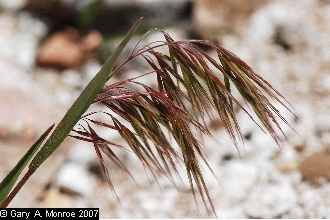
Cheatgrass. Credit: Gary A. Monroe, hosted by the USDA-NRCS PLANTS Database 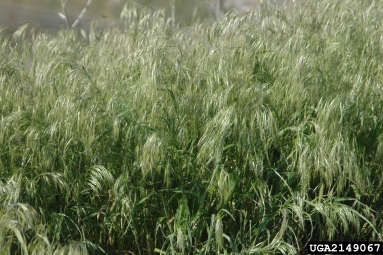
Cheatgrass. Credit: Chris Evans, University of Illinois, Bugwood.org |
|
|
|
|
|
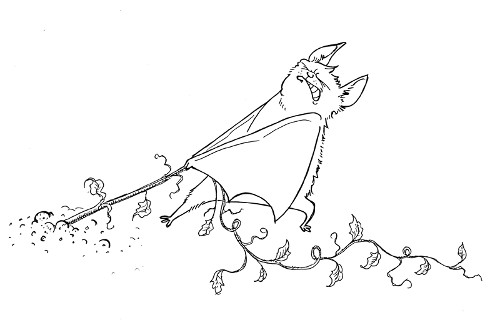
Pull Invasives for Bats
As part of Bat Conservation International's Bat Week, October 24 - 31, events are scheduled across the country to remove invasive plants. Removing invasives can improve habitat for bats by increasing native plant diversity and thereby increasing the diversity of insects available for bats. |
|
  |
|
|
|
|
|
Ballast Water Treatment Treaty to Come into Force in 2017
Texas is home to a large and important shipping industry. Its ports receive hundreds of ships from around the world. Many of these ships carry ballast water that may contain invasive species. This worrisome fact is made even more so by the arrival of the much larger ships that can travel through the enlarged Panama Canal (the "New Panamax" ships). Not only will these ships be carrying larger ballast loads, they will also be arriving from ports in Asia that had previously only been shipping to U.S. ports on the Pacific Coast, potentially carrying more and new invasive species to Texas ports. However, there is good news on the horizon. On September 8, 2017, the International Maritime Organization's Convention on the Control and Management of Ships' Ballast Water and Sediments will enter into force. Adopted 12 years ago, it has finally been ratified by enough countries to allow it to enter into force. |
|

Credit: http://damenballastwatertreatment.com  |
|
|
|
|
|
Invasive Spotlight: Chinese Tallow Tree (Triadica sebifera) The Chinese tallow tree is a deciduous tree that grows to 60 feet (18 m) in height and 3 feet (90 cm) in diameter. With its ability to begin reproducing after as little as three years; produce large numbers of seeds that are transported by both water and birds; change soil conditions that suppress the growth of other plants; tolerate shade, flood and saline soils; sprout from roots; and build a substantial seed bank, this highly invasive species can transform native habitats into monoculture tallow forests. It invades stream banks, riverbanks, and wet areas like ditches, as well as upland sites. The Chinese tallow tree is listed on the Texas Department of Agriculture's noxious weed list. It is an important invasive species especially in East Texas. |
|
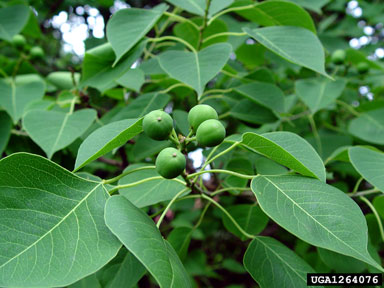
Credit: Chris Evans  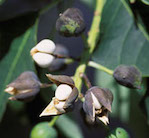
Left: Cheryl McCormick, University of Florida, Bugwood.org. Right: James H. Miller, USDA Forest Service, Bugwood.org |
|
|
|
|
|
More News
Restoring Guadalupe Bass After the Smallmouth Invasion Invasive Crawfish Found in NW Minnesota Lake Combatting Feral Hogs, "Texas Style" A Tale of Two Invasives Asian Jumping Worms Speed Soil Nutrient Loss in Wisconsin Forests Using Mud Daubers in Search for Invasive Spider Beetle a Potential Control Agent for Water Chestnut Environmental DNA Used to Detect Invasive Crayfish |
|
|
|
|
|
 |
|
|
If you would like to highlight a successful invasive species project or nominate a special person to be highlighted in an upcoming iWire, please send the details to iwire@texasinvasives.org. |
|
|
|
|
|
Sentinel Pest Network and Invaders of Texas Species Workshops
Invaders of Texas workshops train volunteers to become citizen scientists to detect and report invasive species. Workshops, which are free, include information on the Sentinel Pest Network, which serves to increase the awareness and early detection of the Emerald Ash Borer, Cactus Moth, Asian Longhorned Beetle, and other pests of regulatory significance. Upcoming Workshops:
Saturday, October 15, 2016 Saturday, October 22, 2016 Saturday, October 29, 2016 For more information or to register to attend a free workshop, please visit the Workshop Page. |
|
|
 |
 |